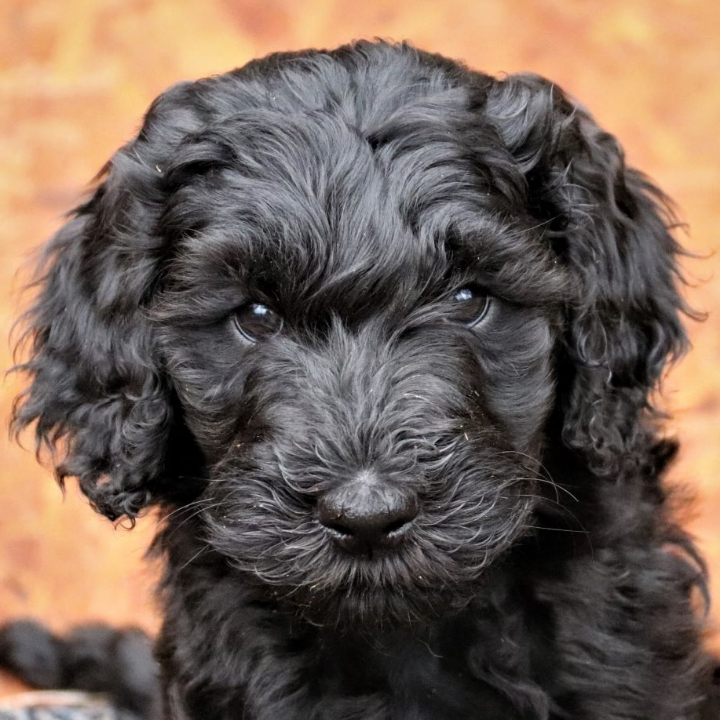
The Havanese ("Habaneros" in Spanish) is also known as the Havana Silk Dog. These little "charmers" are a part of the Bichon Family and are descended from the same bloodlines that produced the Water Spaniel, Poodle, and Portugues Water dog. It is believed that during the days of the Spanish Empire they were brought to Cuba by sea captains to be sold to wealthy Cuban families as well as given as gifts to win the favour of wealthy senoras.
The breed is thought to have developed without outside influence and evolved unique adaptations for the hot cuban climate. It is a remarkably heat-tolerant dog, due to its unique coat. The coat is like raw silk floss, profuse, but extremely light and soft, and insulating against the tropical sun. In its native country, the coat was never clipped for this reason, and the hair never tied into a topknot, as the Cubans believe the hair protects the eyes from the harsh sun. It loves the water and is an accomplished swimmer.
By the mid-eighteenth century, they became very popular in Europe. Queen Victoria is said to have owned two and Charles Dickens had one called Tim, which was much beloved by his seven children. They were exhibited in the early European dog shows and type was well-established. In Cuba meanwhile, the times were changing. The aristocracy of the sugar barons was dying out and a new class was emerging, the bourgeoisie, and the little dog of Havana, adaptable as always, became an exceptional family dog, playmate of children, watchdog. It is a position he has held there for the past hundred and fifty years. It is said, though debated, that they were also a herder of the family poultry flock.
For much more information on everything Havanese visit the Havanese Fanciers of Canada website http://www.havanesefanciers.com/.
HAVANESE Official Breed Standard - C.K.C.
ORIGIN & PURPOSE
The breed comes from the Western Mediterranean region and has developed along the Spanish and Italian costal region. It would seem that these dogs were imported early to Cuba by Sea Captains. Erroneously, the most frequent brown colour of these dogs (tobacco) gave birth to the legend which would mean it to be a breed originating from Havana, capital of Cuba. Political events led to the total disappearance of the old bloodlines of the Havanese in Cuba; apparently a few dogs were successfully smuggled out of Cuba whose descendants have survived in the USA
GENERAL APPEARANCE
The Havanese is a sturdy little dog, low on his legs, with long abundant hair, soft and preferably wavy. His movement is lively and elastic.
TEMPERAMENT
Exceptionally bright, he is easy to train as a watchdog dog. Affectionate, of a happy nature, he is amiable, a charmer, playful and even a bit of a clown. He loves children and plays endlessly with them.
SIZE
Height at the withers from 23-27cm. Tolerance from 21-29cm.
COAT & COLOUR
Hair: undercoat wooly and not very developed, it is often totally absent. The topcoat is very long (12-18cm in adult dog), soft, flat or wavy and may form curly strands. The usage of scissors to cut the length of the coat and all trimming is forbidden. Exception: tidying up the hair on the feet is permitted, the hair on the forehead may be slightly shortened so that it does not cover the eyes and the hair on the muzzle may be slightly tidied up, but it is preferable to leave it in natural length. Colour: there are two varieties of colour. Rarely completely pure white, fawn in different shades of light fawn to Havana brown (tobacco colour, reddish brown); patches of those colours in the coat; slight blackened overlay admitted. Permissible colours and patches (white, light fawn to Havana brown) with black markings. Black coat.